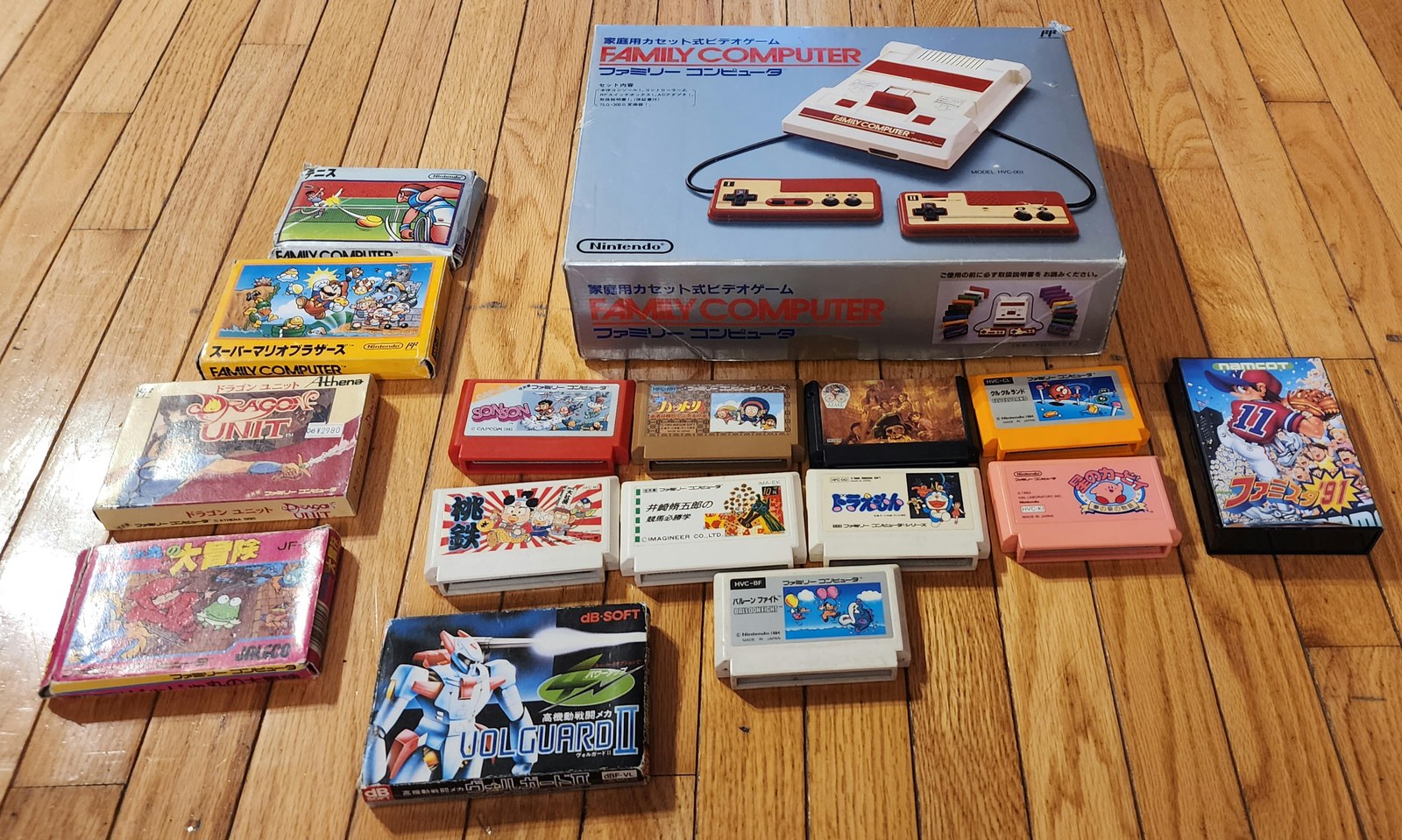
Most Saturday mornings begin with coffee or a lie-in. For Reddit user u/zarltok on r/videogames, it started at 8 AM when his wife woke him up about a cardboard box left on a nearby street curb. Someone in the neighbourhood had placed it outside as rubbish.
Inside was not trash at all: it was an authentic, original Japanese Nintendo Family Computer (Famicom) in its original retail box, alongside a dozen vintage boxed and loose cartridges including Super Mario Bros, Dragon Unit, Volguard II, Balloon Fight and Kirby's Adventure.
"Marry her again"
The post quickly blew up on r/videogames with over 4,000 upvotes. The top reaction was immediate: "Marry her again," wrote one commenter, while another joked, "Is your wife single?"
Beyond the humour, collectors shared genuine amazement at how pristine the box looked. Japanese Famicom boxes from the mid-1980s are notoriously fragile cardboard. Finding one with intact styrofoam, paperwork and matching controllers sitting on a pavement in 2026 is practically unheard of.
How treasures end up on curbs
Several commenters shared similar stories about why vintage game collections get thrown away. Often, older relatives or landlords clearing out estates simply see faded Japanese electronics and assume they are obsolete junk.
One commenter recounted finding an entire bin bag of Nintendo 64 games during college move-out week. Another mentioned picking up an original Sega Mega Drive with sonic cartridges at a car boot sale for five pounds because the seller thought old cords meant it was broken.
Physical hardware outlives digital promises
Stories like this illustrate why physical video games hold a special place in culture. Forty years after that Famicom rolled off Nintendo's assembly line in Kyoto, its circuits and cartridges still work immediately when plugged in. There are no mandatory software updates, no digital storefront checks, and no licences that can be remotely revoked. A physical cartridge on a shelf or in an attic remains playable for generations.