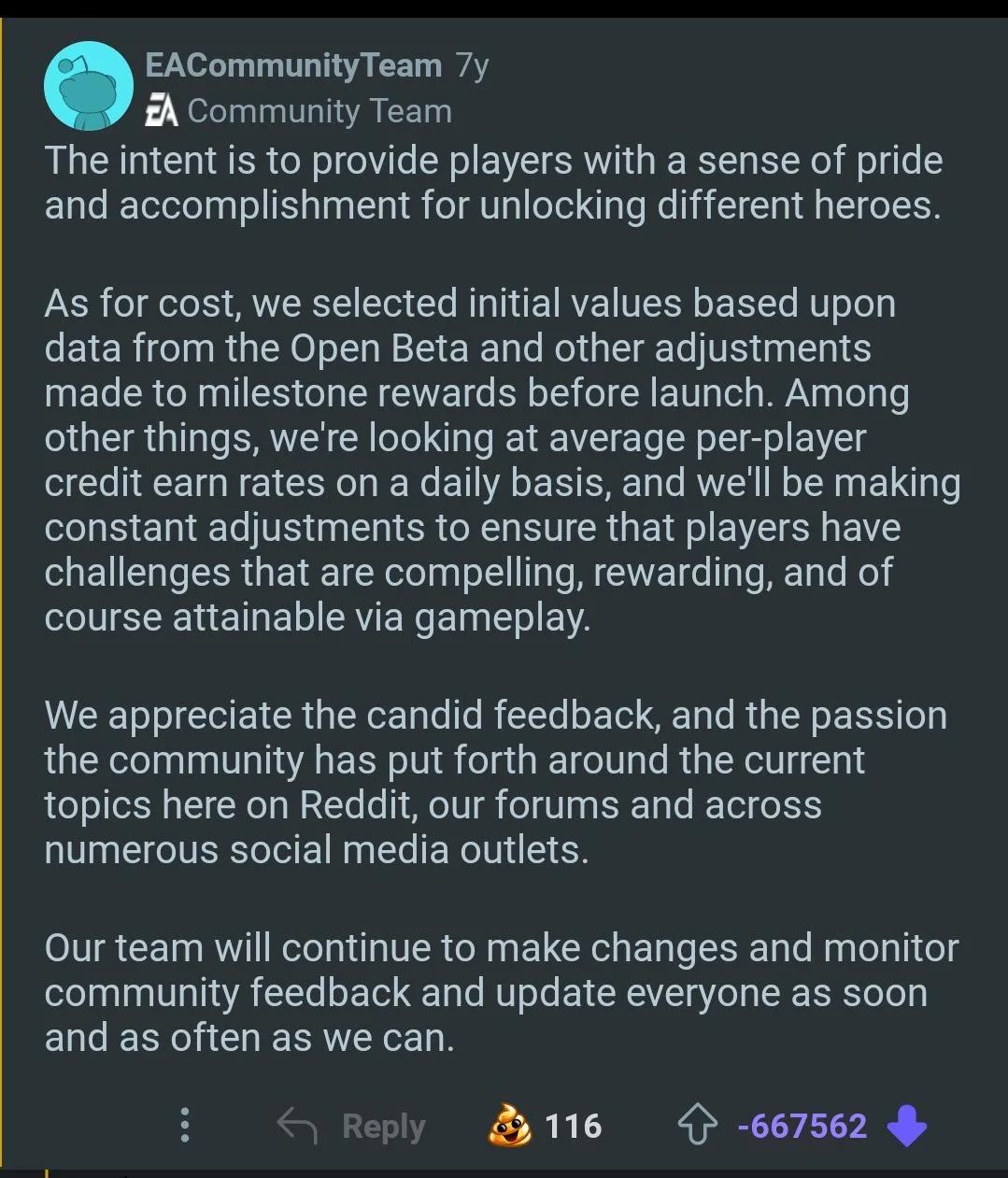
In November 2017, Electronic Arts made internet history, though not the kind any studio wants. When players of Star Wars Battlefront II discovered that iconic heroes like Darth Vader required up to 40 hours of gameplay grind or real-money loot box purchases to unlock, anger erupted across Reddit.
An official statement from the EA Community Team attempted to explain the system: "The intent is to provide players with a sense of pride and accomplishment for unlocking different heroes." The response became an instant meme and rapidly accumulated over 667,000 downvotes, securing a Guinness World Record that stands to this day.
"The worst PR in gaming history"
A recent post on r/videogames brought the historic moment back into focus. Commenters looked back at how tone-deaf corporate messaging united the entire gaming community against predatory microtransactions.
"That comment was a turning point," noted one commenter. The backlash was so intense that Disney executives reportedly intervened, EA temporarily disabled in-game purchases before launch, and governments in Belgium, the Netherlands, and the UK launched formal investigations into video game loot boxes and gambling laws.
Surprise mechanics and player fatigue
Replies pointed out that EA's reputation never fully recovered. Many recalled when EA representatives later defended loot boxes in parliamentary hearings by calling them "surprise mechanics" and comparing them to Kinder Surprise chocolate eggs.
Others lamented how the gaming industry has evolved since 2017. While Battlefront II eventually removed loot boxes and reworked its progression into a beloved game, battle passes and live-service monetisation have become even more pervasive across modern retail titles.
When games were complete on the disc
The "pride and accomplishment" controversy highlights a fundamental shift in the video game landscape. In the cartridge and disc era, unlocking characters like Mewtwo in Super Smash Bros or secret cars in Gran Turismo genuinely meant mastering the game. Today, digital publishers often treat full-price retail games as platforms to sell digital currency. Physical retro games continue to be a refuge for collectors who want complete, self-contained experiences without microtransaction paywalls.